There may be spoilers…
It may be the tropiest trope of all: A fair young woman falls for a rich handsome prince.
The Commoner – a limited series released on Prime in February 2025 – is a real-life version of that trope.
The series is based on the true story of Sonja Haraldsen and Prince Harald of Norway and their nine-year struggle to get permission to marry – from the King of Norway and from the Norwegian government.
Apparently, the story is very accurate.
But, romance thrives on fantasy! With larger-than-life heroes, penniless (but plucky!) heroines, and dramatic conflicts the couple must resolve through their actions.
If the commoner-prince romance trope is presented realistically, can it still be romantic?
And if the conflict is largely external, with the king deciding the couples’ fate, where’s the drama?
Let’s find out.

A down-to-earth heroine
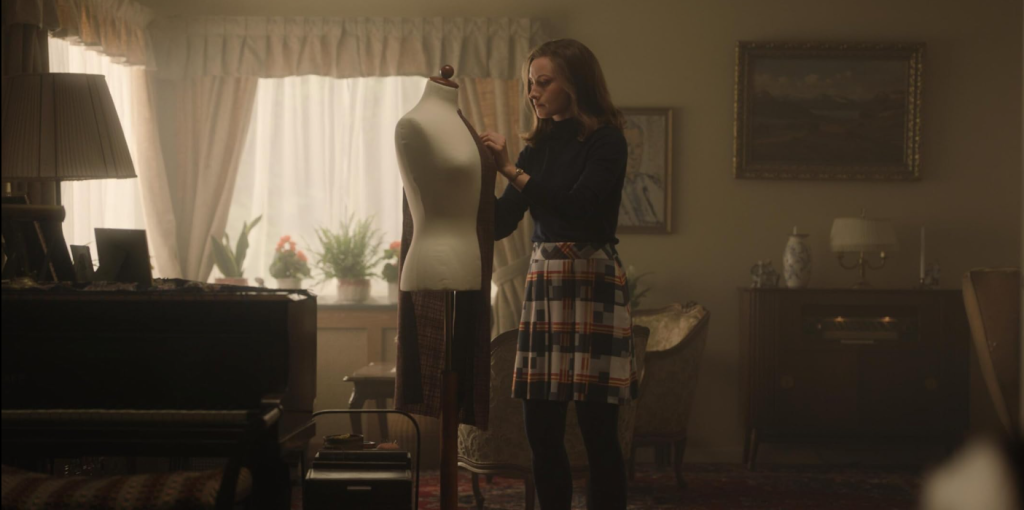
The titular ‘commoner’ Sonja is ably depicted by Gina Bernhoft Gørvell.
Sonja has the most screen time in the series, and she spends much of that time pondering whether she should stay with her prince or move on.
It would be easy for such a character to seem meek and lacking in agency, but Sonja is shown to be highly competent. She runs her family’s clothing store (and is always beautifully dressed). But, she’s no girly-girl, and is shown at points mowing the lawn, shovelling the driveway, and very aggressively gutting a pile of fish.
The key is, she does have agency; for this commoner, waiting for her prince is not a necessity, it’s a choice.
A powerless hero
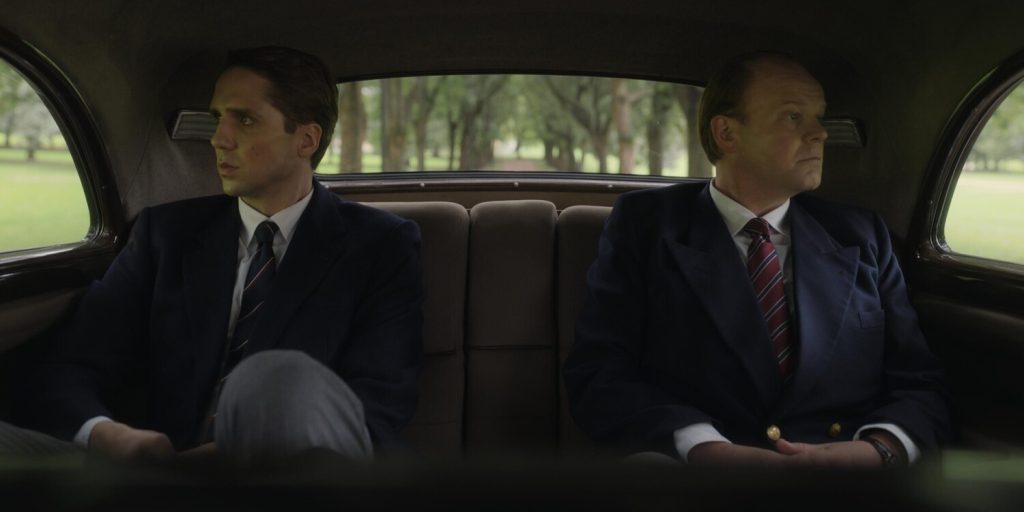
Harald, played by Sindre Strand Offerdal, is in many ways his girlfriend’s foil. Where she is competent and self-directed, Harald seems unsatisfied and ineffectual. He’s not heroic in the least – not by traditional standards, anyway.
For example, he’s a wretched public speaker, an absolute dead-weight of zero charisma and zero humour who is painful to listen to.
But more importantly, despite being a prince and heir to the throne of Norway, he is powerless to decide his own fate – especially when it comes to his love life. His government has to approve his marriage, and they aren’t keen to see him end up with a commoner.
So his entire story is, “Gee, I’d really like to marry you – but see, I have to get permission from my father and my country first? Is that, like, okay?”
A drawn-out conflict
This story has conflict: Harald and Sonja want to get married, but they can’t. They can’t even openly date.
The story’s tension comes from, Will they ever be allowed to marry? Will Sonja wait? Should she wait? Since things aren’t progressing, when should she cut her losses and move on?
And since their separation seems unjust, there is tension in waiting for the injustice to be resolved.
So there is tension, but it’s not really ‘romantic’ tension. There’s no thrill of uncertainty, of not really knowing how the other person feels. Harald and Sonja fall in love quickly, and while they’re not demonstrative, they show no uncertainty in how they feel about each other.

What makes this story romantic
Romances that rely completely on some kind of external barrier can feel a bit dull, since the leads can’t resolve their conflict themselves, so they become passive players in their story. They can’t earn their happily ever after.
But, despite having no real control over their destiny, this couple does manage to earn that happy ending.
How?
By persisting.
If you have no power in a battle, your strongest weapon may well be unflagging patience.
Sonja has her doubts, but she never strays.
And Harald? He is steadfast. Like, if you look up that word, you’d just see a picture of this guy staring back at you.
Harald can’t decide to marry Sonja, but he can decide to grab his woman (metaphorically – there is no sex or implication of sex in this series) and hold on for dear life.
So he isn’t entirely passive. In fact, when faced with endless roadblocks, he does the one thing that’s in his power to do – he declares that if he can’t marry Sonja, then he will never marry.
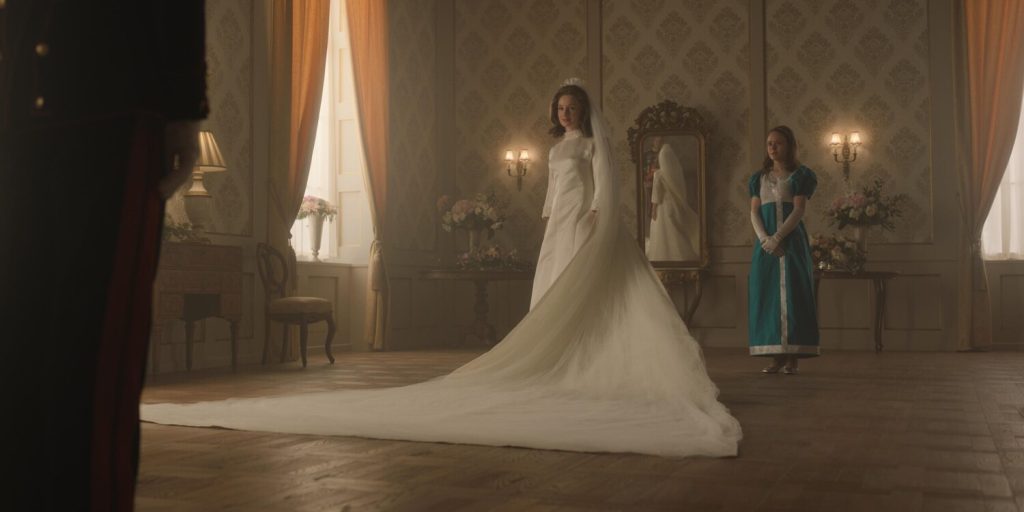
And when we (finally!) see Sonja walking down the aisle towards Harald, and the camera focuses only on him, watching her. And we finally see him smile… It is… sweet. Moving, even.
Antidote to the new world order?
A few years (or days?) ago, I might have complained that these two should have just taken off, shirked their obligations, and turned their back on a system that disrespected their personal freedom.
But now… I feel a respect for their observance of the law of the land, and their unswerving loyalty and commitment to honouring that law, however unfair it was.
Adherence to order and the rule of law might seem quaint, but it’s also a little bit comforting in these strange days. It shows a respect for the stability of their country that is honourable.
Closing notes
Note that the Commoner is a Norwegian series, and was filmed in Norwegian (the language, I mean). I usually hate reading sub-titles, but I think it’s well worth it in this case. I almost never hear Scandinavian languages spoken, and it was fascinating just to listen, and hear some of the similarities to English.
The language contributes to a feeling of calm I experienced while watching – the story feels (and is) very removed from reality, in time and place. It also features some gorgeous and soothing misty mountains and blissful seascapes.